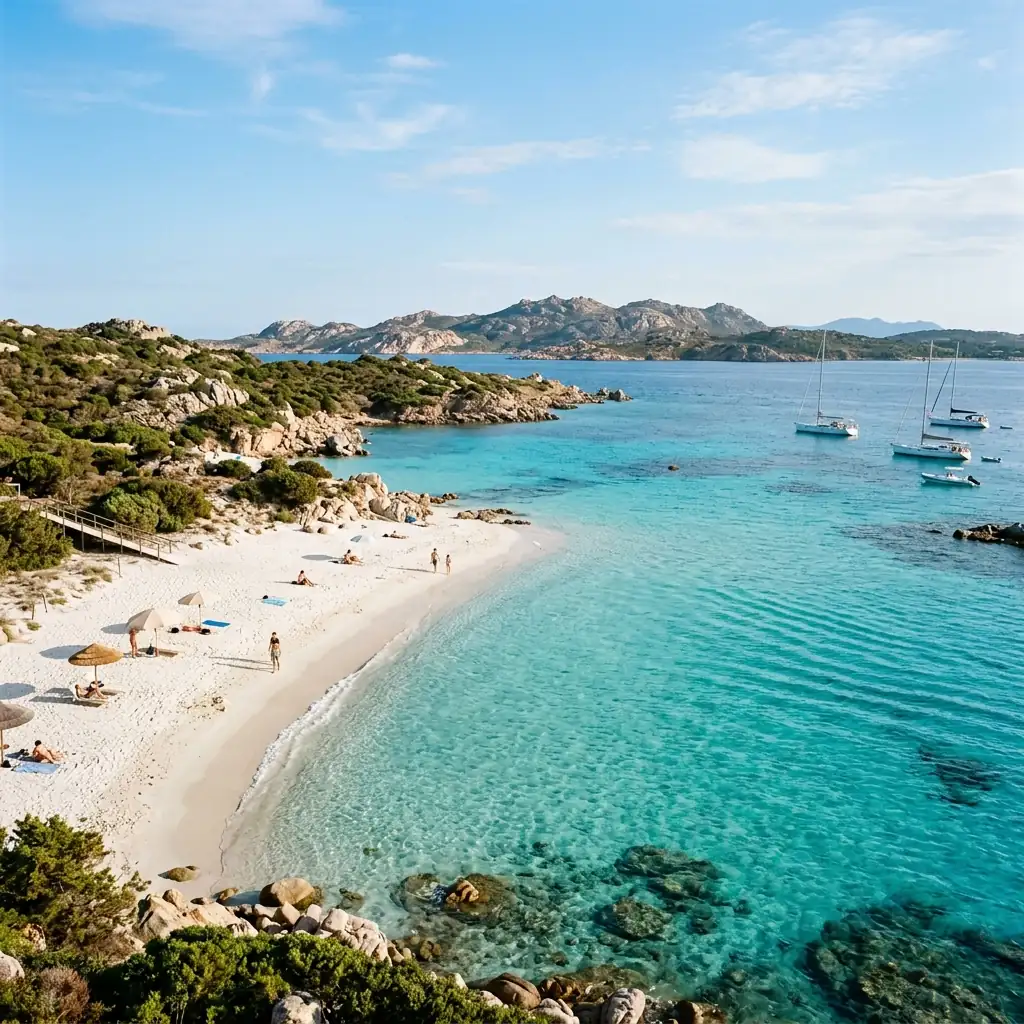

Choosing where to stay in North-East Sardinia is not simply a matter of finding the prettiest beach on a map. Olbia, Porto Rotondo, Porto San Paolo, San Teodoro and Porto Cervo offer very different holidays: driving times, walkable amenities, evenings and the pace of the day all change. Two resorts less than forty kilometres apart can feel like entirely different destinations.
At Klodge, we work along this coast every day. The first question we ask guests is not “which property do you like best?” but “what do you want your days to look like?” This guide takes the same approach. It compares each area honestly, explains Olbia’s distinct neighbourhoods and helps you decide whether you need a convenient touring base, a home by the beach or two separate stops.
How to choose the right base
Start with four practical questions. Will you have a car? Distances look short in North-East Sardinia, but summer traffic and parking can transform an easy day out. How important is a walkable beach? A home beside the sea lets families move between the water and the house without packing the car every morning. What do you want after sunset? Olbia and San Teodoro offer more evening life, while Porto San Paolo is deliberately quieter. Finally, how long are you staying? Efficiency matters on a three-day break; a ten-day holiday allows room for a second base.
Do not book on reputation alone. Porto Cervo is exactly right for travellers drawn to the Costa Smeralda, but inconvenient if most of your plans are south of Olbia. Olbia town is excellent for flights, restaurants and practical errands, yet it is not a beach resort. The best base is the one that reduces the journeys you personally expect to make.
If you are travelling after the summer peak, our guide to planning a holiday in Sardinia in September covers weather, seasonal services and the differences between the beginning and end of the month.
Olbia: town, Pittulongu or the southern coast?
“Staying in Olbia” can mean several very different things. There is a working town with a historic centre, a long beach district to the north and quieter coastal villages facing the Tavolara marine area to the south. Olbia also has the widest choice in the Klodge portfolio, so it deserves to be divided into three clear micro-areas. For anyone searching for the best area to stay near Olbia, this distinction matters more than the name of the town alone.
Olbia town: services, easy arrivals and local evenings
The centre suits short breaks, late flights and travellers who want restaurants, shops and an evening stroll within easy reach. Corso Umberto I, the waterfront and the everyday life of the town reveal a side of Gallura that purpose-built resorts cannot offer. It is also a sensible base when not everyone in the group wants to spend every day on the beach.
The trade-off is straightforward: the centre is not on the sand. You need transport for beach days. Our guide to what to see in Olbia explains the town and nearby coastline in more detail, and will help you decide whether that combination fits your holiday.
Pittulongu, Mare e Rocce and Bados: Olbia by the sea
This is the part of Olbia we recommend most often to guests who want both a beach holiday and practical access to town. Pittulongu lies about eight kilometres from the centre, but it is not one single beach. La Playa, Lo Squalo, Il Pellicano, Mare e Rocce and Bados form a sequence of bays with generally shallow water, seafront restaurants, small food shops and many homes within walking distance of the shore.
La Playa is broad and well serviced; Mare e Rocce feels smaller and more intimate; Bados is more residential and opens towards Golfo Aranci. These names are not interchangeable. Check the exact pin of a property before booking, especially if walking to a particular beach matters to you.
Murta Maria, Porto Istana and Costa Corallina: towards Tavolara
South of town, the mood changes. Murta Maria provides useful everyday services in a quieter setting; Porto Istana adds four pale-sand coves with gently shelving water; Costa Corallina brings you closer to Porto San Paolo and departures for Tavolara. Choose this side of Olbia if swimming, snorkelling and the protected marine landscape matter more than nightlife.
Evening options are more limited than in town, so a car remains valuable. In return, you shorten journeys to Porto San Paolo, Cala Brandinchi and San Teodoro. It is an excellent compromise for families who want a peaceful home and a strong beach focus.
Porto Rotondo: marina life, beaches and understated polish
Although Porto Rotondo is part of the municipality of Olbia, it feels like a destination in its own right. The village revolves around its marina, small squares and a more polished collection of restaurants and services. It suits couples and families who enjoy going out for dinner while keeping beaches such as Ira, Sassi, Alghe and Marinella close by.
Its position is useful for exploring both Golfo Aranci and the southern Costa Smeralda. The main drawback is high-season traffic: short distances can take longer around peak beach and dinner times. Choose a property according to whether you expect to walk to the marina or drive to the beach most days.
Porto San Paolo: the best base for Tavolara
Porto San Paolo is compact, relaxed and firmly oriented towards the sea. Boats leave for Tavolara from the village, and the island’s limestone outline dominates the horizon. It is a natural choice for families, snorkellers and travellers who prefer quiet dinners to late-night bars.
Porto Taverna, Cala Girgolu, Porto Istana and the San Teodoro coast are all within easy reach. A car is still recommended: the village centre is walkable, but the best beaches are spread along the coast. If Tavolara is part of your plan, confirm departure times and sea conditions directly with the boat operator before setting out.
San Teodoro: iconic beaches and lively summer nights
San Teodoro is the obvious choice when La Cinta, Lu Impostu, Cala Brandinchi and Capo Coda Cavallo are at the top of your list. The centre comes alive after sunset with restaurants, market stalls and bars, attracting couples, groups of friends and families looking for a sociable atmosphere. July and August are busy; the shoulder seasons feel markedly calmer.
Popularity requires planning. Parking and access to the best-known beaches cannot be treated as an afterthought. From 1 June to 30 September, access to Cala Brandinchi and Lu Impostu requires advance booking. Procedures may change, so check the official San Teodoro Beaches website shortly before your visit rather than relying on last year’s information.
Porto Cervo and the Costa Smeralda: an exclusive stay
Porto Cervo is the symbolic centre of the Costa Smeralda: a marina, designer boutiques, small squares, restaurants and a summer calendar shaped by yachting and social events. Stay here when the holiday revolves around Pevero, Capriccioli, Cala di Volpe, Liscia Ruja and evenings on the Costa. It is not the most efficient base for daily trips to San Teodoro or Tavolara.
A car is essential because the beaches are distributed along the coast, and actual journey times depend on traffic and parking. Our guide to the best beaches in Costa Smeralda can help you identify the stretch of coastline that suits you before choosing a property.
Can you visit North-East Sardinia without a car?
A stay without a car is possible, but only with realistic expectations. Olbia town is easiest for airport access, services and local buses. Pittulongu can work if your property, beach and food shops are genuinely within walking distance. Porto San Paolo is compact, although land-based exploring becomes limited. San Teodoro’s centre is comfortable on foot, but reaching outlying coves may require seasonal shuttles, taxis or private transfers.
Bus routes and frequencies change by season. Check them shortly before travel and never build the entire holiday around an old timetable. With young children, beach equipment or a late arrival, a pre-booked transfer or a rental car is usually the least stressful option.
One base or two? A practical guide by trip length
- 3–4 days: choose one area and explore it properly. Olbia/Pittulongu is the most versatile.
- 5–7 days: one base is still enough. Combine nearby beaches with one or two longer excursions.
- 8–10 days: consider two bases if both the Costa Smeralda and San Teodoro are priorities.
- More than 10 days: two areas can create a welcome change of pace—for example Porto Cervo or Porto Rotondo, followed by Porto San Paolo or San Teodoro.
Changing accommodation takes time: packing, checking out, travelling and checking in again. On a one-week holiday, staying put is often more relaxing, even if one or two outings involve a longer drive. Split the trip only when the two halves have clearly different aims.
Frequently asked questions
Where should first-time visitors stay?
Olbia and Pittulongu offer the strongest balance of airport access, services, beaches and routes north and south.
Is Olbia a good base for both Costa Smeralda and San Teodoro?
Yes. It is particularly useful if you want to see both, although you should group northern and southern outings rather than cross the whole region every day.
Which area is best for families?
Pittulongu, Porto Istana, Porto San Paolo and Lu Fraili all work well. The exact walking distance to the beach, parking and outdoor space matter more than the resort name alone.
Porto Rotondo or San Teodoro?
Porto Rotondo is smaller, more polished and marina-oriented. San Teodoro has more famous beaches close by and a livelier, more informal evening scene.
Where should I stay for Tavolara?
Porto San Paolo is the most convenient departure point. Costa Corallina, Porto Istana and Murta Maria are also well placed.
Where can I walk to the beach?
It depends on the property, not just the destination. Pittulongu has several genuinely walkable options; parts of Porto Rotondo, Porto San Paolo and San Teodoro can also work, but always check the exact listing location.
Olbia or Costa Smeralda: which is the more practical base?
Olbia is more practical for the airport, everyday services and a trip divided between the northern and southern coasts. Choose the Costa Smeralda if you intend to focus on Porto Cervo, Capriccioli, Pevero and Cala di Volpe.
Where should I stay without a car?
Olbia town is the easiest option for services and public transport. Pittulongu can also work if you choose a property genuinely close to the beach, restaurants and a grocery shop.
Choose the property, not only the destination
When deciding where to stay in North-East Sardinia, the exact location matters almost as much as the resort name. A beachfront home in Pittulongu can make the car secondary; an inland property near a famous resort may still require daily driving. Consider beach access, nearby services, parking, orientation and outdoor living space alongside the general area.
Browse Klodge holiday homes in Sardinia and compare their exact locations on the map. Our local team can help you find not simply the most attractive property, but the one that genuinely fits the pace of your trip.