
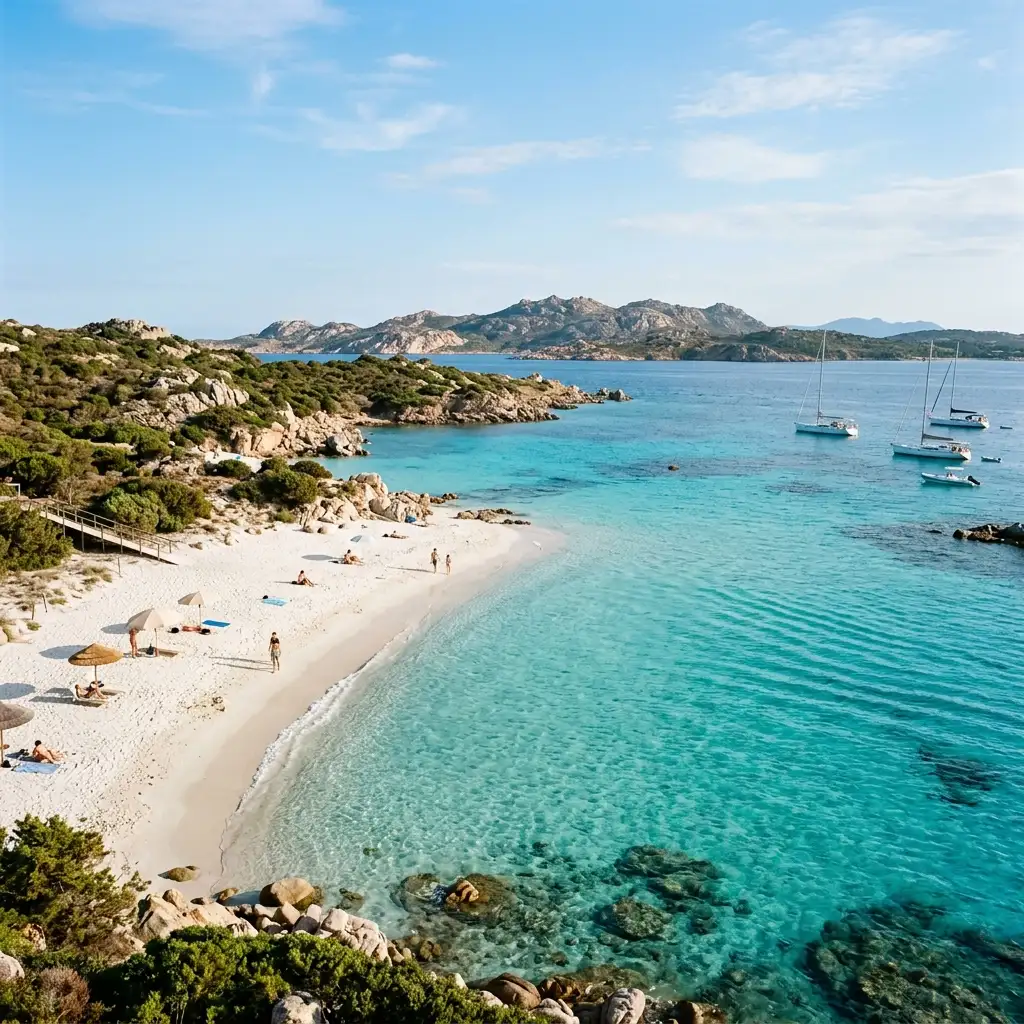
There’s a specific moment when you realise you’re on the Costa Smeralda. It’s not when you see the water. It’s when you step into the sea and feel the sharp contrast between the hot sun on your skin and the perfect coolness of the water. It’s the warmth of the pink granite under your bare feet, and the scent of the Mediterranean scrub carried by the breeze.
At Klodge, we live on this coast year-round. We know these costa smeralda beaches in every season, we understand how currents change, and how the wind shapes each day. Precisely because we know them without filters, we want to tell you what no travel guide does: the good, the uncomfortable, and those practical details that everyone here knows but you won’t find anywhere online.
The beaches worth knowing about
Spiaggia del Principe — The most beautiful. And the hardest to reach.
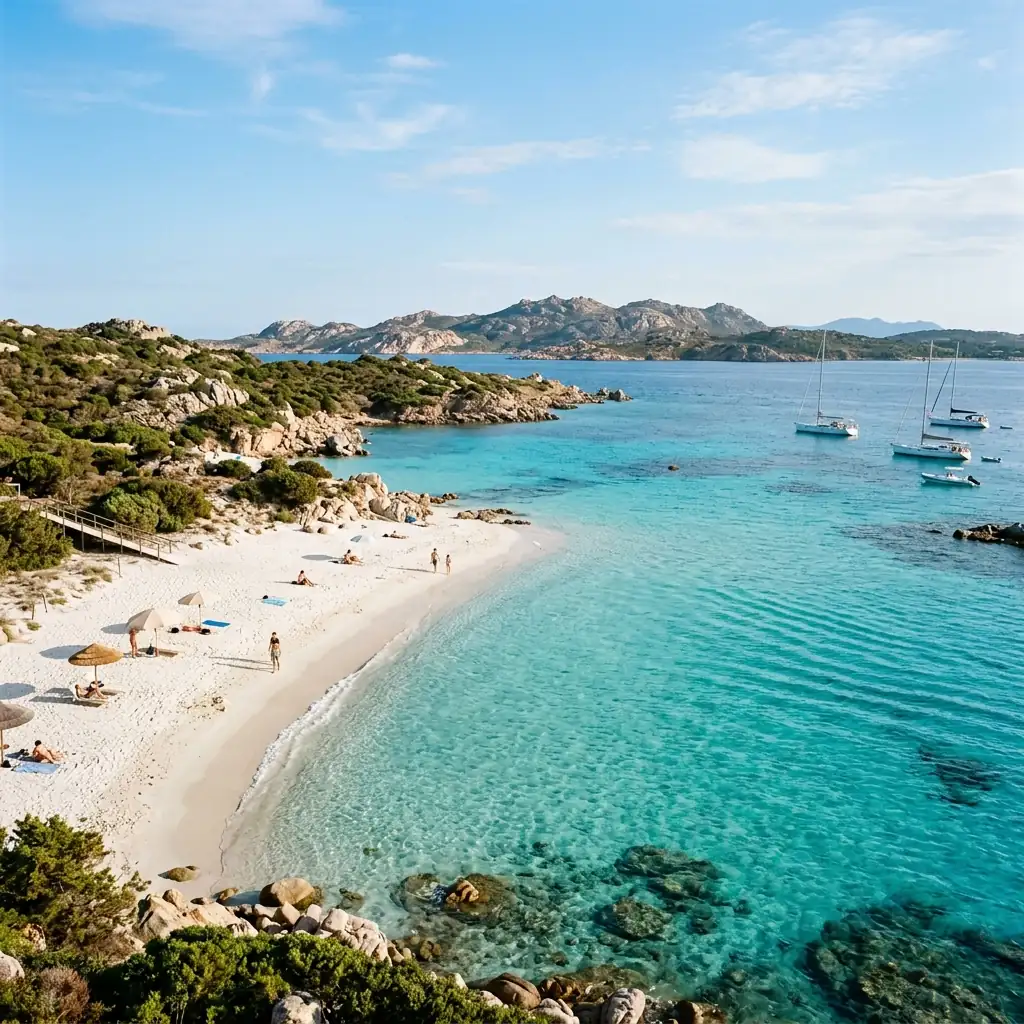
Spiaggia del Principe was Prince Karim Aga Khan’s favourite beach, and for good reason. The sand is white, impossibly fine. The water shifts from bottle green to full turquoise. The crescent-shaped bay, sheltered by granite boulders, creates a natural pool.
But getting there takes some planning. From the paid car park, a steep dirt path leads down for about ten minutes in full sun. It’s manageable with children who can walk, but definitely not with a pushchair or heavy bags.
In July and August, the beach fills up completely by 9 AM. If you don’t leave early, you risk doing the walk only to turn back with no spot. Coming in June or September, or in the late afternoon when the light turns golden, lets you experience it without the crowd.
Capriccioli — The one for families
If you’re travelling with children, capriccioli beach is where you want to be. It is a series of small coves tucked between smooth granite boulders, with a sandy seabed that stays shallow for metres. Small children can paddle safely, and the rocks on either side create natural shade.
The car park is steps from the shore — a rare convenience on this coast — and there’s a kiosk for basics. However, precisely because it is convenient and sheltered, it fills up fast in peak summer. In August, the space between umbrellas is genuinely tight. Arriving very early morning — before 8 — or from 5 PM onwards makes a massive difference.
Liscia Ruja — Space and beach clubs
This one is different. Liscia Ruja is the only beach on the Costa Smeralda with a real sense of space. Long, wide, with sand in golden and pink tones you don’t find elsewhere. In front, the islands of Soffi and Mortorio. On the sides, you find the most refined beach clubs on the coast, perfect if you are looking for a premium beach club costa smeralda with services or the Cala di Volpe restaurant.
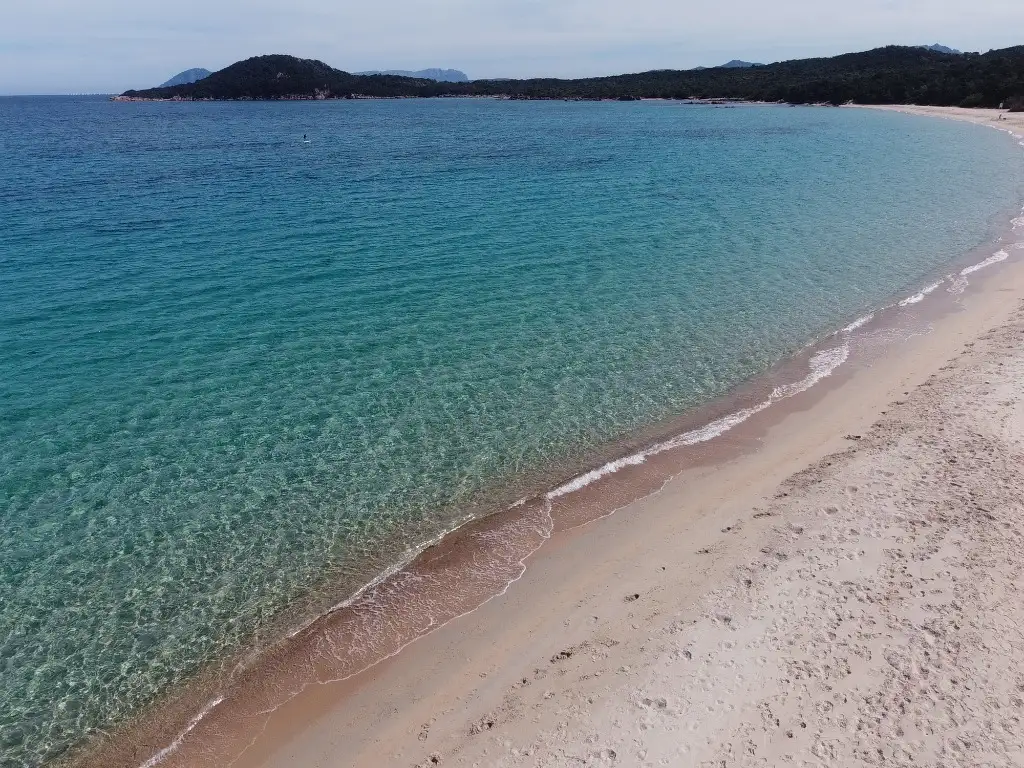
But there is also plenty of free space. The weak point is the access: a dirt road of about 2 km, dusty, with potholes that require careful driving. It is perfect on Mistral days, when the wind comes from the northwest and the bay stays protected.
La Celvia — Porto Cervo’s quiet heart
When talking about porto cervo beaches, la celvia beach is a key reference. A small bay with slightly coarser sand — mixed with shell fragments — surrounded by the gardens of the coast’s most prestigious properties. Myrtle and juniper hedges separate the shore from high-end villas. In between, a strip of free beach where space is limited but the water is some of the best in the area for snorkelling along the granite rocks.
Don’t expect wide open spaces. This is a beach for slowing down — a good book, a snorkel mask, and the awareness of being in the heart of the area.
Romazzino — Where the Mediterranean scrubland meets the sea
The name comes from the Sardinian word for wild rosemary, because it grows everywhere behind the beach. Romazzino is a striking mix of colours: the deep green of the vegetation, the white sand, and the sea going from aquamarine to cobalt blue within a few metres’ depth.
It is naturally sheltered from westerly winds, making it a smart choice when the Mistral blows. Most of the beach is serviced by the historic resort behind it: free space exists, but it is limited. The atmosphere here is quieter, more intimate, and more relaxed.
Grande and Piccolo Pevero
Three kilometres from Porto Cervo, the coastline opens into twin bays. Piccolo Pevero is a small, almost hidden cove. Grande pevero beach is a wide crescent of very white sand with a view of the Li Nibani islands — one of the finest panoramas in the gallura beaches.
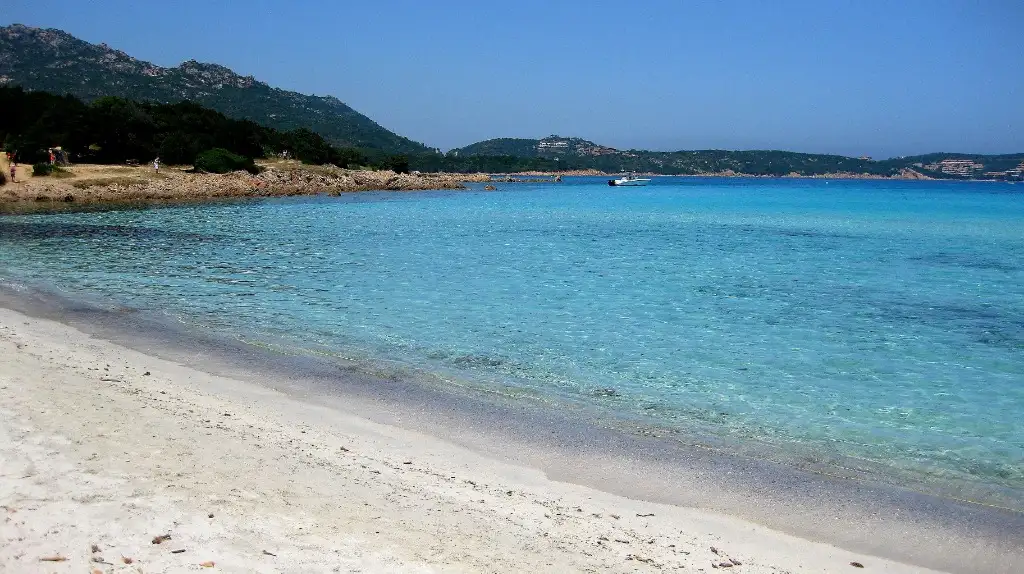
However, Grande Pevero is exposed to the Sirocco wind. When this blows from the southeast, the beach accumulates posidonia on the shore — the dark seagrass that signals a healthy sea, but can be visually surprising. Behind the beach, there is also a lagoon that in the hottest weeks can become unpleasant. Between the two, Piccolo Pevero is often the better choice as it is less known, less crowded, and naturally sheltered.
The rule that everyone here knows
In Sardinia, there’s an unwritten rule that every local follows and no travel blog tells you: choose your beach based on the wind direction that day. It is the factor that decides whether the costa smeralda sea will be crystal clear or rough.
When the Mistral blows (from the Northwest — the most common summer wind): the sea gets rough on north and west-facing shores. Move to southeast-facing beaches. The best options are Capriccioli, La Celvia, and Romazzino. You’ll find flat water and perfect visibility.
When the Sirocco blows (from the Southeast): east-facing beaches become unusable. Avoid Liscia Ruja and the Pevero. Head to Cala Granu, near Porto Cervo marina, or the sheltered bays of the Gulf of Arzachena. And if you want a day trip away, the porto rotondo beaches and the bays around Olbia are sheltered from most winds and just twenty minutes by car.
A weather app like Windy is your best friend. Check the wind direction every morning before leaving.
Exploring the Coast from the Water
There is a limit to what you can see by car. Many of the most exclusive coves along the coast have no land access at all; the only way to reach them is by boat.
Renting a RIB (rigid inflatable boat) or a yacht allows you to discover a side of the coast most visitors miss. From local marinas like Poltu Quatu, Cannigione, or Porto Cervo itself, you can quickly reach the uninhabited islands of Soffi and Mortorio.
These islands are a paradise of granite rocks and scrub. There are no facilities, just Caribbean-like water and excellent snorkelling. Be sure to check local marine park regulations regarding anchoring. If you have a full day, the La Maddalena Archipelago is the next essential stop. Sailing between Spargi, Budelli, and Razzoli, and diving straight from the boat is one of the most memorable experiences you can have in Sardinia.
Live the Costa Smeralda, don’t just visit it
There’s a real difference between visiting the Costa Smeralda and living it. Day-trippers see crowded beaches, expensive parking, queues at the kiosk. Those who stay in a private property — with their own pool, their own panoramic terrace, their own pace — discover a different Costa Smeralda. The quiet one. The real one.
Klodge was built for exactly this: to offer you a curated selection of properties in the heart of the Costa Smeralda, chosen one by one for location, quality and character. Because we know this territory — and it’s the territory we want to share with you.