


The holiday rental market in Sardinia has experienced extraordinary growth, driven by the beauty of the Gallura coastline and an international demand increasingly oriented towards exclusivity. However, for those who own a high-end property, managing short-term rentals is no longer a simple activity to run in your spare time. Between the introduction of new safety requirements, national tax reforms, and sudden changes in the fee models of the main booking portals, the scenario has become highly technical.
For villa owners sardinia, one of the most significant and debated updates concerns the changes Airbnb is making to its service fee structure. The mandatory transition to a new commission system, combined with local tax regulations, risks eating into profit margins if appropriate countermeasures are not taken.
The October 2026 Turn: Goodbye to Split Fees
Until recently, the platform operated mainly through the split-fee model. Under this system, the host was charged a reduced fee (typically 3% of the nightly price), while the guest was charged an additional service fee ranging from 14% to 16% at the time of payment.
Starting October 13, 2026, Airbnb is making the airbnb simplified pricing model mandatory for all private and European host accounts, also known as the host-only fee airbnb. This means that the previous split-fee model disappears completely. From the moment of activation, the platform will deduct a flat 15.50% fee directly from the gross payout set by the owner. Conversely, the guest will pay no additional booking fee to Airbnb, seeing a transparent final price instead.
Although the platform presents this change as a simplification to improve transparency and make it easier to set prices for those who want to run holiday home rentals, the new scheme shifts the entire commission burden to the owner. This requires an immediate recalculation of price lists to avoid a drastic drop in net earnings.
Recalculating Prices: Why Adding 15.5% Is Not Enough
Many owners make the mistake of thinking that to compensate for the new deduction, it is sufficient to increase the nightly price by 15.5%. The mathematical reality is different. If an owner wants to keep their previous net payout unchanged, they must apply a higher percentage increase.
Let’s look at a practical example. If a owner wants to receive a net payout of 100 euros for a stay (excluding taxes), under the new 15.50% host-only model, the price to set on the platform cannot be 115.50 euros. Indeed, 15.50% calculated on 115.50 euros equals 17.90 euros, leaving the host with only 97.60 euros.
To obtain a net payout of 100 euros, the correct formula requires dividing the desired amount by 0.845 (which is 1.0 minus 0.155). The final price to set on Airbnb must therefore be 118.34 euros. This means that to protect your margins, the listing price must be increased by 18.34%. This is a considerable markup that risks placing the property out of the market if the quality perceived by the guest is not properly emphasized.
The Financial Impact on European Owners
While the mathematical adjustment of rates is a mandatory step, the tax implications can vary significantly depending on the owner’s tax residence and the country where the property is located. For owners of Italian properties, such as those in Sardinia, the financial impact is particularly harsh.
Under the Italian flat-tax regime for short-term rentals (cedolare secca), taxes are calculated on the gross rental income paid by the guest. Crucially, hosts cannot deduct any operational costs, including the service fees retained by booking portals.
Under the old split-fee system, the guest paid the 14-16% airbnb service fee directly to the platform. This fee did not count towards the gross rental income agreed between owner and guest, so it was excluded from the owner’s taxable income. The host only paid tax on their payout (which included the 3% host fee).
Under the new host-only fee model, the gross price paid by the guest must cover the entire 15.50% fee. By raising the listing price by 18.34% to cover the commission, the taxable income rises by the same percentage. Consequently, the host pays tax on a higher gross amount that includes Airbnb’s commission. Essentially, hosts are paying government tax on money that Airbnb retains, further reducing the actual net cash return.
Additional 2026 Obligations: National Identification Codes and Safety
The management of rates and taxes is part of an increasingly strict regulatory framework in Italy and Sardinia. To operate legally, every holiday home and tourist rental must obtain a National Identification Code (CIN), which replaces local regional codes (like IUN in Sardinia). Failing to display the CIN in online listings or outside the property exposes owners to severe administrative fines.
Furthermore, obtaining the CIN is linked to compliance with specific safety standards. Properties must be equipped with certified portable fire extinguishers and active gas and carbon monoxide detectors.
Managing these rules requires constant vigilance, especially since platforms act as tax agents, withholding a 21% tax on gross earnings for non-professional hosts. This automatic withholding requires meticulous bookkeeping, particularly for owners managing multiple properties where higher tax brackets or professional business registration requirements apply.
DIY vs. Professional Management: How to Protect Your Margins
In the face of complex regulations and rising platform fees, achieving rental yield optimization through managing properties directly (“do-it-yourself”) is becoming a stressful and less profitable business. Many owners are choosing to partner with a specialized company in property management sardinia like Klodge.
Entrusting your property to a professional manager helps overcome the impact of these unilateral airbnb commission changes through three main pillars:
1. Direct Booking Strategy: Klodge does not rely on a single channel. We promote properties through an international multi-channel network, focusing on direct bookings through our proprietary website which carries significantly lower fees than standard OTA portals.
2. Dynamic Revenue Management: Our experts and algorithms adjust rates in real time, not just to cover platform commissions, but to maximize occupancy based on Sardinia’s unique seasonal demand, securing premium rates during peak periods.
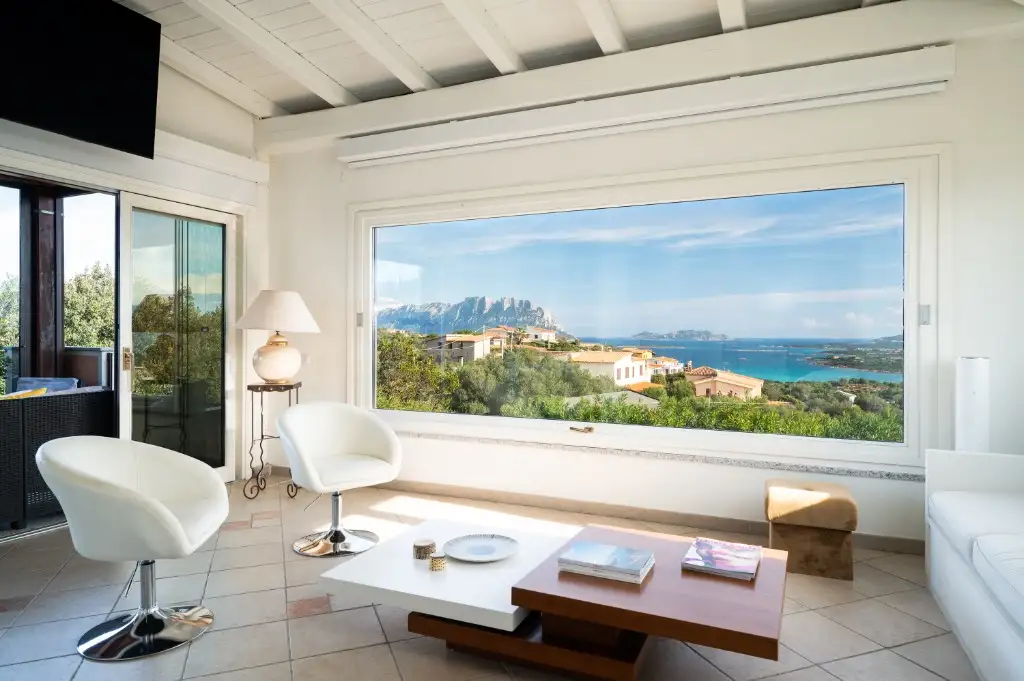
3. Comprehensive Operational and Legal Care: From handling local safety requirements and code registrations to coordinating professional cleaning, laundry, and maintenance of pools and gardens. The owner receives a clear monthly payout, free from operational stress.

The complexity of the new pricing and tax rules requires a business-like approach. Protecting the value and yield of a luxury villa in Sardinia is achievable, provided you choose professional standards.
—
If you own a premium villa in Sardinia and want a free valuation of its rental potential, or if you want to discover how to optimize the financial performance of your property, contact the Klodge team today via WhatsApp or visit our owners’ page on our website.